
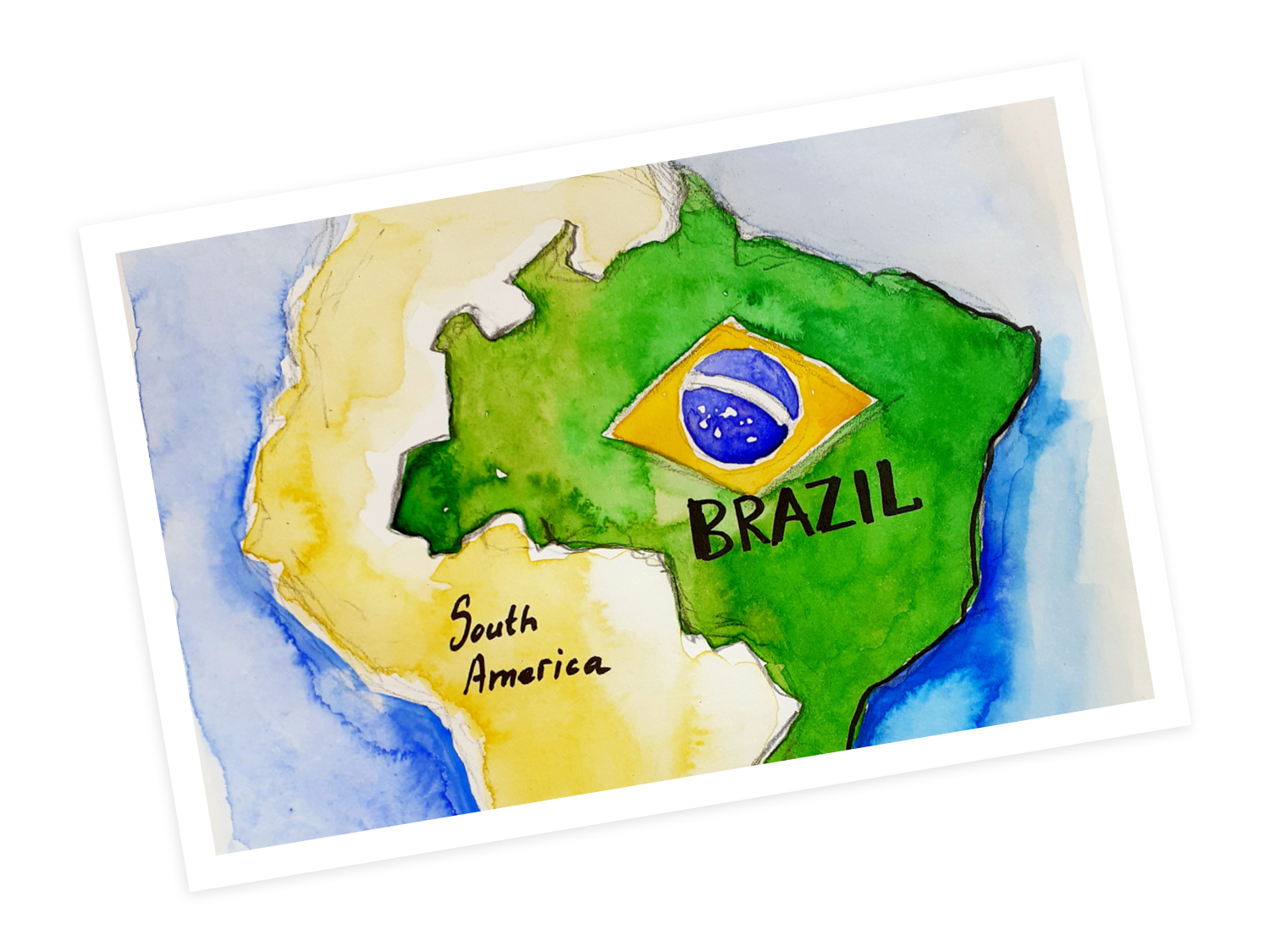
Women in Brazil were granted the right to vote in 1932 after feminist pioneer, Bertha Lutz, founded the Federação Brasileira pelo Progresso Feminino (FBPF) or Brazilian Federation for Women’s Progress. Along with voting rights, the FBPF advocated for women to gain equal access to education and the opportunity to work without their husband’s authorization. Feminist activism maintained its vigor over the next few decades as women’s movements across the country fought for equal participation in civil society. Thanks to the work of these activist groups, the government drafted a new constitution in 1988 guaranteeing “men and women have equal rights and duties.” Though Brazil isn’t highly represented by women in the political sector, participation rates are on the rise. In 2010, the country elected its first female president, and in 2018 a record number of women ran for office and won seats at all levels of government. However, that same election gave rise to a conservative administration that has shown a lack of concern for protecting women’s rights. Though women have equal access to education and health care, Brazil has one of the highest rates of gender violence in the world, including femicides and domestic violence. Fortunately, the country’s feminist activism runs deep, and female-led organizations continue to show up for the women of Brazil.
Historically, women in Brazil have not been encouraged to participate in sports, and idealized notions of femininity have been a barrier for women in sport. A government law prohibited women from playing sports against their “nature” from 1941 until 1979. Despite these obstacles, Brazil is home to some of the world’s greatest female athletes, including five-time FIFA World Player of the Year, Marta Vieira da Silva. The women’s national soccer team has competed in eight World Cups, placing second in 2007 and in 2020 began earning equal pay to the men’s national team. Brazil has also been dominant in Beach Volleyball, winning gold in 1996, and silver in 2000 and 2004.
Meet and support global leaders creating change in Brazil:
Carol Barcellos
Kika Branco
Daniela Castro
Diana Currie
Cassia Damiani
Paula Korsakas
Maíra Liguori
Thaís Olivetti
Aline Silva
Beatriz Vaz
Júlia Vergueiro
How does Brazil compare to other countries?
Where do you want to explore next?

Women in Leadership
PERCENTAGE OF WOMEN IN PARLIAMENT AS OF 2020
15%
PERCENTAGE OF WOMEN IN MINISTRY POSITIONS AS OF 2020
9%
Has a Woman Ever Been Head of State or Head of Government?
Dilma Rousseff, 2010 - 2014
HAS A WOMAN EVER BEEN SPORTS MINISTER?
Unknown
Title IX Timeline


1822
Brazil declared independence from the former United Kingdom of Portugal on September 7th.
1932
Women gained the right to vote (full suffrage). Esmeraldo Azuaga became the first woman to represent Brazil in the Olympics.
1976
Two athletes became the first women to represent Brazil in the Paralympics.
1981
Brazil signed the Convention on the Elimination of All Forms of Discrimination against Women (CEDAW).
1984
Brazil ratified CEDAW. M. Ferraz, Malsar Marcia, Piedade Aminta, Hermany Anelise, & Matos Maria Jussara became the first women from Brazil to win Paralympic medals.
1996
The members of the Women’s Basketball Team, Volleyball Team, Jackie Silva, Sandra Pires, Mônica Rodriques, & Adriana Samuel became the first women from Brazil to win Olympic medals.
2001
Brazil signed the Optional Protocol to CEDAW.
2002
Brazil ratified the Optional Protocol to CEDAW.
2010
Dilma Rousseff became the first female President of Brazil.
2017
Brazil signed the UN Security Council Resolution 1325, affirming that peace and security efforts are more sustainable when women are equal partners in the prevention of violent conflict, the delivery of relief and recovery efforts and in the forging of lasting peace.

Women in the olympics
participation through the years
-
7
-
17
-
5
-
10
-
69
-
115
-
345
-
336
-
154
Women in the Paralympics
participation through the years
-
0
-
2
-
18
-
29
-
87
-
171
-
95
Elite Sports Participation
First Year Women Participated In The Olympics
1932
Year Women’s Participation In Olympics Was Equal To Men’s
2010
First Time A Woman Won An Olympic Medal
Jackie Silva & Sandra Pires: 1996, Beach Volleyball (Gold) Mônica Rodriques & Adriana Samuel: 1996 Beach Volleyball (Silver) Women's National Basketball Team: 1996 (Silver) Women's National Volleyball Team: 1996 (Bronze)
First Year Women Participated In The Paralympics
1976
Year Women’s Participation In Paralympics Was Equal To Men’s
As of 2020, women's participation was still less than men's.
First Time A Woman Won A Paralympic Medal
Piedade Amintas: 1984, Shot Put (Gold) Javelin (Gold) Discus Throw (Silver) Cross Country (Silver) Malsar Marcia: 1984, Athletics (Gold & Bronze) Cross-Country (Silver) Hermany Anelise: 1984, Athletics (Silver) Long Jump (Silver) Athletics (Bronze) M. Ferraz: 1984, Shot Put (Gold) Athletics (Silver) Matos Maria Jussara: 1984, Swimming (Silver)
FIFA
Fédération Internationale de Football Association
National Women’s Team?
Yes
First Year Of Play
1986
Pay Gap Comparison
Equal Pay as of 2020
Gender Initiatives
Brazil’s Campeonato Brasileiro de Futebol Feminino da Série A-1 (women’s professional football league) had 16 different clubs in the league in 2021. 91% of the first team players had football as their primary source of income and 78% of first team players in the league had a monthly salary.
FIFA is committed to the growth and development of women’s football around the globe.
For More Information
FIBA
Fédération Internationale de Basketball
National Women’s Team?
Yes
First Year Of Play
1946
Pay Gap Comparison
Pay Unknown
Gender Initiatives
Increasing the participation of women in basketball at all levels was named as one of FIBA’s eight strategic objectives (2019- 2027) and one of FIBA’s three strategic priorities (2019-2023).
For More Information
LOCAL
Sports
Initiatives
Major Regional Or Country Sport Initiatives
The UN Women and International Olympic Committee’s One Win Leads to Another program aims to build self-confidence among young women through sport, while reducing gender inequality.
Community Organizations That Have Signed The Brighton + Helsinki Declaration
