
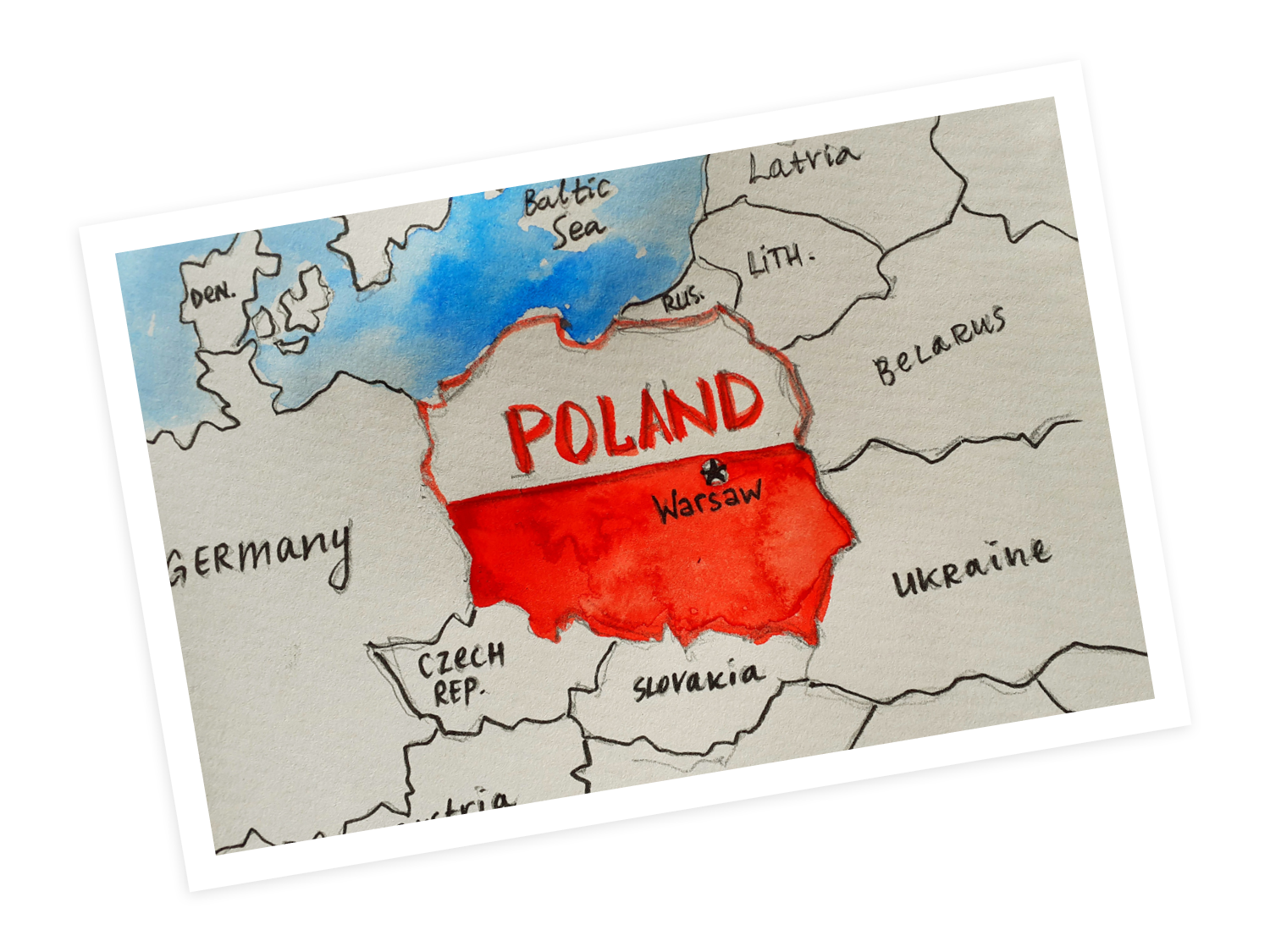
Poland gained independence in 1918, at the end of the first World War, as one of the outcomes of the Paris Peace Conference and Treaty of Versailles. That same year, women gained the right to vote, making Poland one of the first European country’s to grant women suffrage. Under Article 33 of the country’s current constitution, it states that “Men and women shall have equal rights in family, political, social and economic life in the Republic of Poland… in particular, regarding education, employment and promotion, and shall have the right to equal compensation for work of similar value, to social security, to hold offices, and to receive public honors and decorations.” The country has elected three female prime ministers, the first being Hanna Suchocka who served from 1992 to 1993. In 2015, the Polish government ratified the Council of Europe Convention on Preventing and Combating Violence against Women and Domestic Violence (Istanbul Convention), and according to a 2019 European Commission report, Poland has one of the lowest gender pay gaps in the European Union. Despite the country’s significant progress toward advancing the rights of women, Poland’s current right-wing populist government has begun implementing regressive policies and legislation severely restricting the rights of women. Already a government strongly influenced by the conservative social views of the country’s Catholic Church, the current administration has begun expanding these ideologies. In 2020, the government implemented anti-abortion laws while also limiting women’s access to reproductive healthcare. Moreover, the Polish parliament is considering withdrawing from the Istanbul Convention claiming it “did not respect religion and promoted controversial ideologies about gender.” Since coming to power in 2015, Poland’s ruling party has undermined, threatened and silenced feminist organizations and human rights activists. However, despite public smear campaigns and the denial of funding, organizations like the Abortion Dream Team, Centrum Praw Kobiet (Women’s Rights Centre), Feminoteka, and Ogólnopolski Strajk Kobiet (All-Poland Women’s Strike) are continuing to make their voices heard on behalf of women across the country.
Though traditional gender norms, limited investment, and pervasive stereotypes around femininity have discouraged women from participating in sports, Poland has a longstanding tradition of successful female athletes. Women first competed in the Olympics in 1924 and the Paralympics in 1972, where ten athletes came home with the country’s first Paralympic medals. In the 1928 Summer Olympics, Halina Konopacka won a gold medal in the discus throw making her the first Polish athlete to win an Olympic medal. At the 2016 Rio Games, 102 female athletes competed for the country winning 8 of Team Poland’s 11 medals, including two golds. The national basketball team qualified for the 2000 Sydney Games and has made 29 appearances in the EuroBasket Women’s championship, winning gold in 1999. Poland’s national volleyball team won bronze in 1964 and 1968 and gold at the 2003 and 2005 European Championship. Cross-country skier, Justyna Kowalczyk, is one of the most decorated athletes in Polish history. She holds two Olympic gold medals, is a two-time World Champion, and holds the record for most wins at the Tour de Ski with 14.
Meet and support global leaders creating change in Poland:
Eliza Eliasz
How does Poland compare to other countries?
Where do you want to explore next?

Women in Leadership
PERCENTAGE OF WOMEN IN PARLIAMENT AS OF 2020
29%
PERCENTAGE OF WOMEN IN MINISTRY POSITIONS AS OF 2020
27%
Has a Woman Ever Been Head of State or Head of Government?
Hanna Suchocka, 1992-1993
Ewa Kopacz, 2014-2015
Beata Szydlo, 2015-2017
HAS A WOMAN EVER BEEN SPORTS MINISTER?
Elżbieta Jakubiak, 2007-2007
Joanna Mucha, 2011-2013
Danuta Dmowska, 2019-2020
Title IX Timeline


1918
Poland gained independence at the end of World War I as one of the outcomes of the Paris Peace Conference and Treaty of Versailles. Women gained the right to vote (full suffrage).
1924
Wanda Dubieńska, a fencing athlete, became the first woman to represent Poland in the Olympics.
1928
Halina Konopacka won a gold medal in athletics to become the first woman from Poland to win an Olympic medal.
1972
Ten athletics and swimming athletes became the first women to represent Poland in the Paralympics and win Paralympic medals (4 gold, 4 silver, 2 bronze).
1980
Poland signed and ratified the Convention on the Elimination of All Forms of Discrimination against Women (CEDAW).
1992
Hanna Suchocka became the first female Prime Minister of Poland.
2003
Poland ratified the Optional Protocol to CEDAW.
2018
Poland signed the UN Security Council Resolution 1325, affirming that peace and security efforts are more sustainable when women are equal partners in the prevention of violent conflict, the delivery of relief and recovery efforts and in the forging of lasting peace.
Women in the olympics
participation through the years
-
39
-
54
-
116
-
86
-
117
-
115
-
242
-
250
-
104
Women in the Paralympics
participation through the years
-
0
-
34
-
54
-
28
-
124
-
75
-
29
Elite Sports Participation
First Year Women Participated In The Olympics
1924
Year Women’s Participation In Olympics Was Equal To Men’s
As of 2020, women's participation was still less than men's.
First Time A Woman Won An Olympic Medal
Halina Konopacka: 1928, Discus Throw (Gold)
First Year Women Participated In The Paralympics
1972
Year Women’s Participation In Paralympics Was Equal To Men’s
As of 2020, women's participation was still less than men's.
First Time A Woman Won A Paralympic Medal
Anna Pogorzelska: 1972, Swimming (Gold & Silver) Barbara Kopycka: 1972, Swimming (Gold & Silver) Krystyna Owczarczyk: 1972, Athletics (Gold & Bronze) Alina Wojtowicz: 1972, Swimming (Gold) Grazyna Haffke: 1972, Swimming (Silver) Women's Relay Team: 1972, Swimming (Silver) Helena Ciapala-Zdunek: 1972, Athletics (Bronze)
FIFA
Fédération Internationale de Football Association
National Women’s Team?
Yes
First Year Of Play
1981
Pay Gap Comparison
Paid Less than the Men's Team as of 2022
Gender Initiatives
FIFA is committed to the growth and development of women’s football around the globe.
For More Information
FIBA
Fédération Internationale de Basketball
National Women’s Team?
Yes
First Year Of Play
1938
Pay Gap Comparison
Pay Unknown
Gender Initiatives
FIBA’s Her World, Her Rules project and social media campaign aims to promote women’s and girls’ participation in basketball throughout Europe.
Increasing the participation of women in basketball at all levels was named as one of FIBA’s eight strategic objectives (2019- 2027) and one of FIBA’s three strategic priorities (2019-2023).
For More Information
LOCAL
Sports
Initiatives
Major Regional Or Country Sport Initiatives
Hosted the 2015 Women and Sport in Europe Seminar to strengthen the role of women in sport throughout Europe.
Community Organizations That Have Signed The Brighton + Helsinki Declaration
