
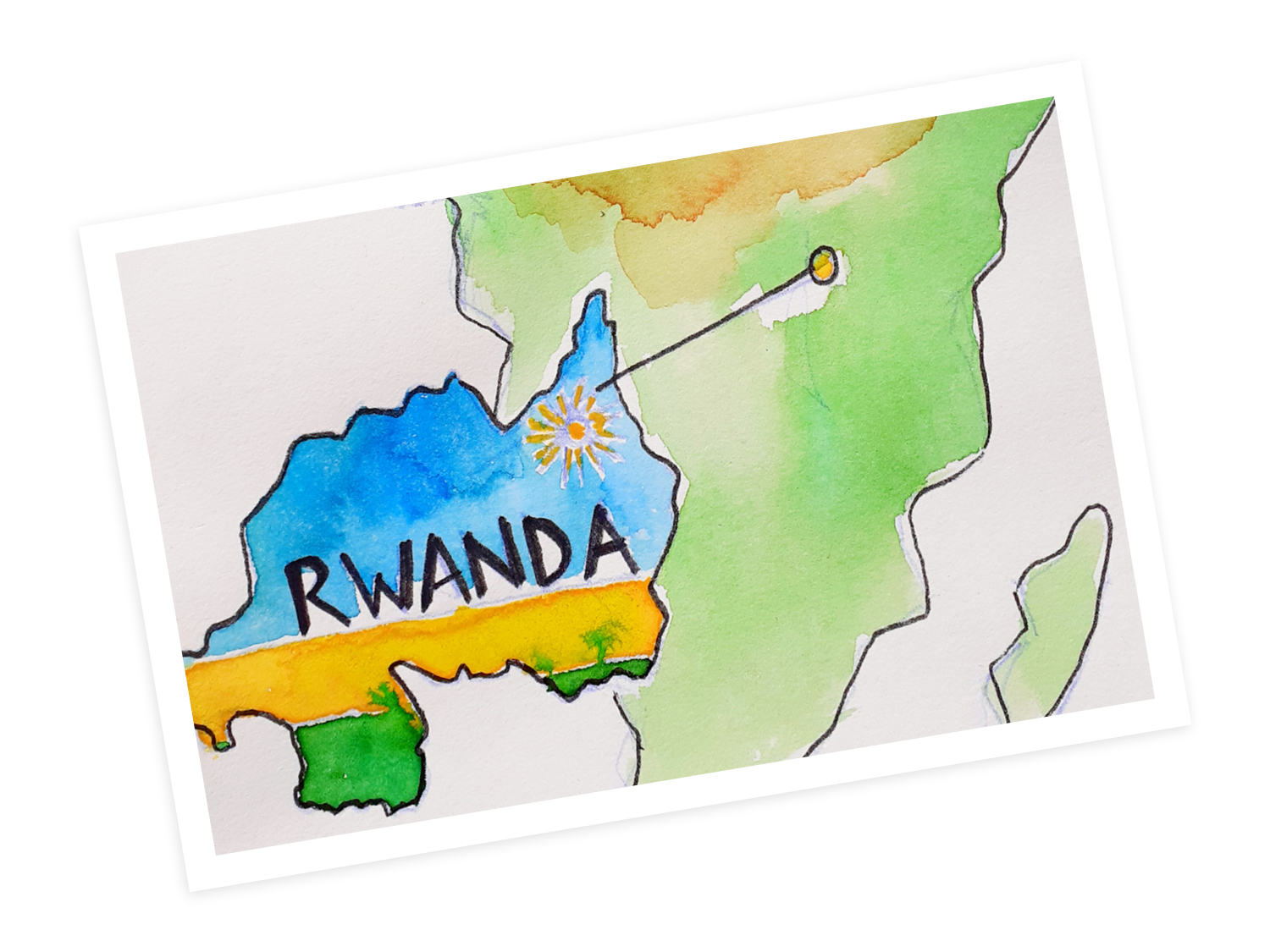
Rwanda gained its independence in 1962, when the Belgium government, at the urging of the UN, divided Ruanda-Urundi into two separate countries – Rwanda and Burundi. Following the country’s devastating 1994 genocide where an estimated 800,000 to 1 million lives were lost, Rwanda was a nation in social and economic disarray. Under the leadership of Paul Kagame, former minister of defense and the country’s current president, Rwanda began to rebuild with women at the forefront. The government drafted a new constitution in 2003 that states, “All Rwandans are born and remain equal in rights and freedoms. Discrimination of any kind or its propaganda based on, inter alia, ethnic origin, family or ancestry, clan, skin color or race, sex, region, economic categories, religion or faith, opinion, fortune, cultural differences, language, economic status, physical or mental disability or any other form of discrimination are prohibited and punishable by law.” The constitution also made it mandatory for women to make up no less than 30 percent of parliamentary seats. As a result, the 2003 election saw 48 percent of seats go to women. Today, 61 percent of parliament is female, which is the highest proportion of representation of any country. The 2021 Global Gender Gap Report, which measures economic participation and opportunity, educational attainment, health and survival, and political empowerment, ranked Rwanda an impressive 7th out of 156 countries. The government relied heavily on women to reconstruct Rwanda’s infrastructure by investing in equal opportunity across all sectors of society. Despite their successes in advancing the rights of women, the country is still heavily influenced by its deeply entrenched patriarchal norms. Gender-based violence remains an issue and according to a 2015 UN Women report, at least 41 percent of women experience physical violence by the age of 15. Fortunately, feminist organizations like the Rwanda Women’s Network, the Nyamirambo Women’s Center, and the Rwanda Men’s Resource Center, are addressing issues of gender-based violence by providing support for victims and pushing for federal legislation that would protect women from violence and discrimination.
Sport has played an integral role in Rwanda’s rebuilding process, serving as a tool for development and peace. The Organization of Kigali Women in Sports (AKWOS) was established in the aftermath of the genocide to provide more sporting opportunities for women and girls. AKWOS developed Physical Education programming for girls which was implemented in schools across the country and worked alongside the Ministry of Education to create scholarship opportunities for girls who participated in sports. Through grassroots efforts by the AKWOS and financial support from FIFA, the first women’s professional soccer league was founded in 2008. Marcianne Mukamurenzi became the first woman to represent Rwanda at the Olympics when she competed in the 1500m and 3000m at the 1984 Los Angeles Games. Olive Akobasenga was the first female athlete to compete for Rwanda in the Paralympics when she ran the 200m T46 at the 2004 Athens Games.
Meet and support global leaders creating change in Rwanda:
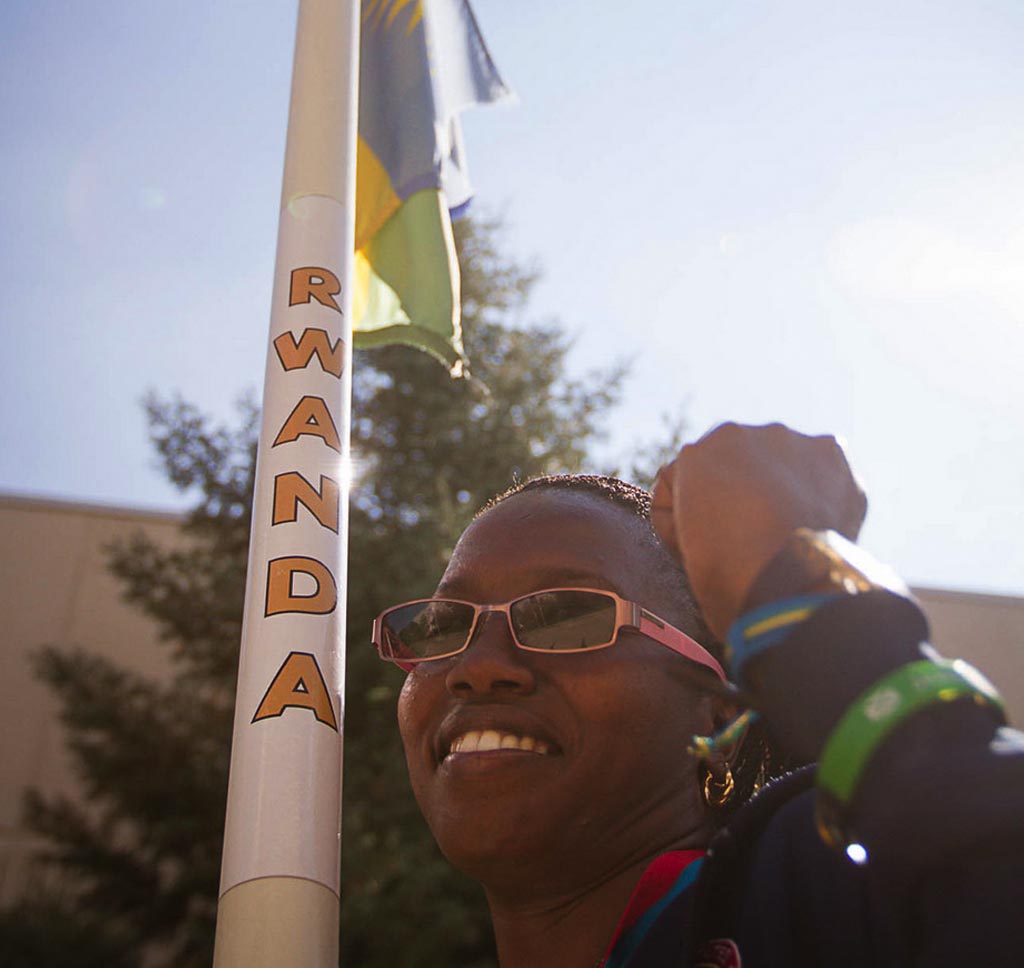
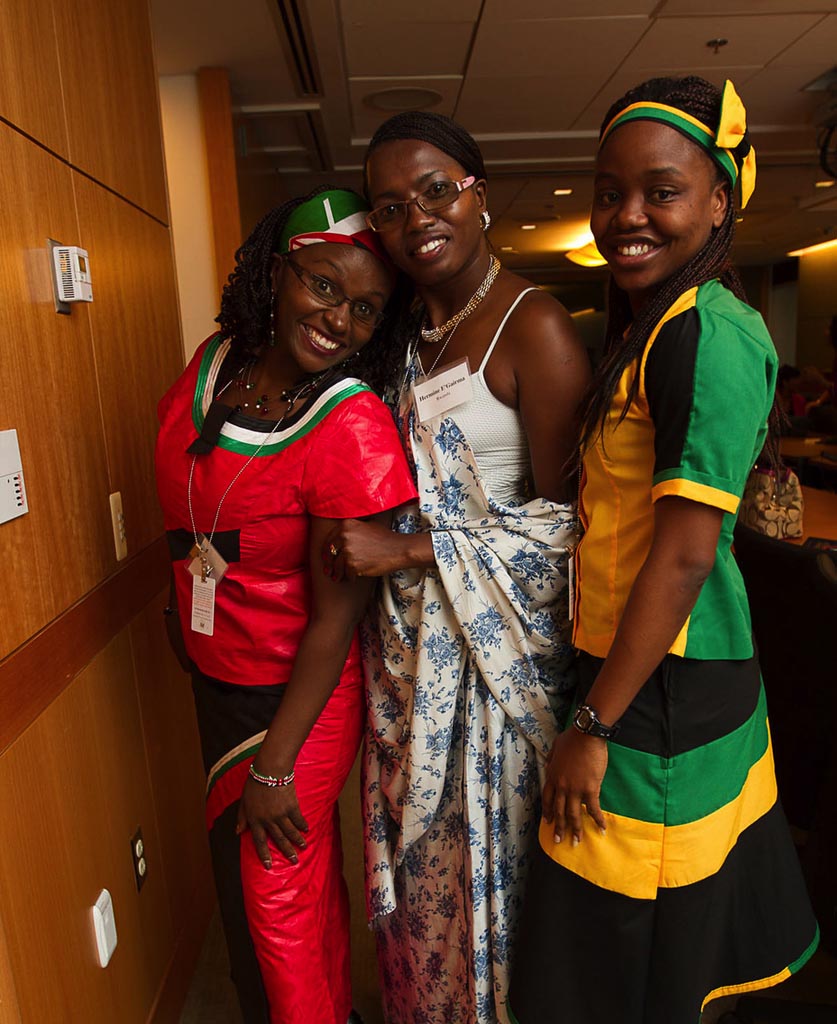
Hermine E'Gairma
How does Rwanda compare to other countries?
Where do you want to explore next?
Women in Leadership
PERCENTAGE OF WOMEN IN PARLIAMENT AS OF 2020
61%
PERCENTAGE OF WOMEN IN MINISTRY POSITIONS AS OF 2020
54%
Has a Woman Ever Been Head of State or Head of Government?
Agathe Uwilingiyimana, 1993-1994
HAS A WOMAN EVER BEEN SPORTS MINISTER?
Aurore Mimosa Munyangaju, 2019- Present
Title IX Timeline


1961
Women gained the right to vote (full suffrage).
1962
Rwanda gained independence on July 1 when the Belgium government, at the urging of the United Nations, divided Ruanda-Urundi into two separate countries - Rwanda and Burundi.
1981
Rwanda ratified Convention on the Elimination of All Forms of Discrimination against Women (CEDAW).
1984
Marcianne Mukamurenzi became the first woman to represent Rwanda at the Olympics.
1993
Agathe Uwilingiyimana became the first female Prime Minister of Rwanda.
2004
Olive Akobasenga became the first woman to represent Rwanda at the Paralympics.
2008
Rwanda ratified the Optional Protocol to CEDAW.
2009
Rwanda signed the UN Security Council Resolution 1325, affirming that peace and security efforts are more sustainable when women are equal partners in the prevention of violent conflict, the delivery of relief and recovery efforts and in the forging of lasting peace.
Women in the olympics
participation through the years
-
0
-
0
-
0
-
0
-
4
-
3
-
6
-
5
-
2
Women in the Paralympics
participation through the years
-
0
-
0
-
0
-
0
-
1
-
12
-
1
Elite Sports Participation
First Year Women Participated In The Olympics
1984
Year Women’s Participation In Olympics Was Equal To Men’s
1988
First Time A Woman Won An Olympic Medal
The first woman could be you!
First Year Women Participated In The Paralympics
2004
Year Women’s Participation In Paralympics Was Equal To Men’s
2004
First Time A Woman Won A Paralympic Medal
The first woman could be you!
FIFA
Fédération Internationale de Football Association
National Women’s Team?
Yes
First Year Of Play
2014
Pay Gap Comparison
Pay Unknown
Gender Initiatives
The first women’s professional soccer league was founded in 2008 with FIFA’s support.
FIFA is committed to the growth and development of women’s football around the globe.
For More Information
FIBA
Fédération Internationale de Basketball
National Women’s Team?
Yes
First Year Of Play
2007
Pay Gap Comparison
Pay Unknown
Gender Initiatives
The NBA and the Basketball Africa League are working together across Africa to raise awareness about gender-based violence, support girls’ education, and increase female involvement in basketball at all levels.
Increasing the participation of women in basketball at all levels was named as one of FIBA’s eight strategic objectives (2019- 2027) and one of FIBA’s three strategic priorities (2019-2023).
For More Information
NBA + Basketball Africa League Partnership
FIBA Strategic Objectives
LOCAL
Sports
Initiatives
Major Regional Or Country Sport Initiatives
The Organization of Kigali Women in Sports (AKWOS) was established in the aftermath of the Rwandan genocide to provide more sporting opportunities for women and girls. AKWOS works with government entities to implement sports programming and scholarships for girls in schools.
