
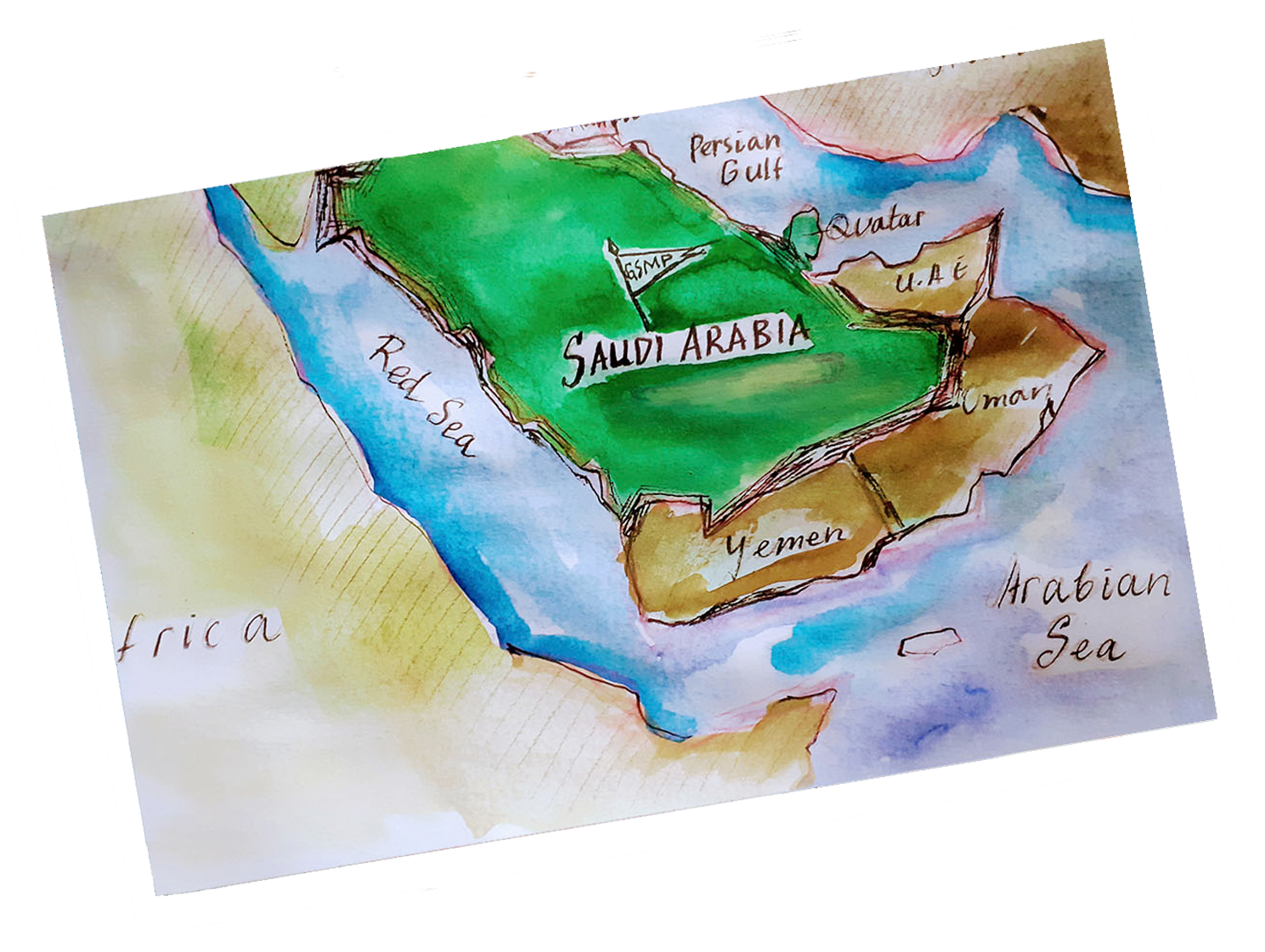
Saudia Arabia became an internationally recognized independent state in 1932 governed by religious conservatism. During the 1970s and ‘80s, the country became the largest producer of oil in the world, which bolstered the economy and resulted in a shift toward modernization, heavily influencing societal norms. However, political power remained with the monarchy ruled by the Saud dynasty whose strictly enforced Islamic law, the Sharia, determined legislation. Under the government’s interpretation of Sharia law, gender segregation was to be observed and women had minimal rights across all sectors of society. Saudi Arabia’s Basic Law, drafted in 1992, states “The system of government in the Kingdom of Saudi Arabia is established on the foundation of justice, ‘Shoura’ and equality in compliance with the Islamic Shari’ah (the revealed law of Islam).” At the turn of the 21st century, some advancements toward gender equality began to transpire in Saudi Arabia. The government ratified the Convention on the Elimination of All Forms of Discrimination against Women (CEDAW) in 2001, and under new leadership, beginning in 2005, introduced initiatives that sought to allay Islamic extremism. In 2009, Norah bint Abdullah Al Faiz was appointed the country’s first female deputy minister, overseeing girls’ education and two years later, women were granted the right to vote and could serve on the Consultative Council. In 2013, the Law on Protection from Abuse was passed, which criminalized domestic abuse, and in 2016, Saudi Arabia announced Vision 2030. Under the blueprint of Vision 2030 it states, “Saudi women are yet another great asset. With over 50 percent of our university graduates being female, we will continue to develop their talents, invest in their productive capabilities and enable them to strengthen their future and contribute to the development of our society and economy.” In 2018, women gained the right to obtain a driver’s license, and a year later women were able to acquire passports to travel without a male guardian. Though some significant progress has been made over the past several years, Saudi Arabia still enforces the guardianship system, where women need male permission to marry, study abroad on a government scholarship, and often require consent in order to work and acquire reproductive healthcare. According to the 2021 Global Gender Gap Report, which measures economic participation and opportunity, educational attainment, health and survival, and political empowerment, Saudi Arabia ranks 147th out of 156 countries. Women make up 20 percent of parliament, and though roughly 51 percent of university students are female, the country’s current workforce is only 33 percent female. Fortunately, nonprofit organizations such as Alnahda and the Association for the Protection and Defense of Women’s Rights in Saudi Arabia, are working to hold the government to account and uphold the promises of Vision 2030’s tenets.
Due to cultural and religious norms, women have historically been banned from participating in sports. However, great progress has been made over the past several years with the Ministry of Sports placing an emphasis on increasing women’s participation. The Vision 2030 blueprint states, “A healthy and balanced lifestyle is an essential mainstay of a high quality of life. Yet opportunities for the regular practice of sports have often been limited. This will change. We intend to encourage widespread and regular participation in sports and athletic activities, working in partnership with the private sector to establish additional dedicated facilities and programs. This will enable citizens and residents to engage in a wide variety of sports and leisure pursuits. We aspire to excel in sport and be among the leaders in selected sports regionally and globally.” In 2017, women were allowed the right to enter stadiums to watch sports, and just three years later the Saudi Sports for All Federation (SFA) of the Saudi Arabian Football Federation launched a 16-team Women’s Soccer League. This was in large part due to the work of managing director of the SFA, Shaima Saleh Al-Husseini, who was appointed in 2019. Al-Husseini has not only established women’s professional leagues, but has developed initiatives like the Quality of Life Program with the aim of getting more women and girls involved in sports.
Meet and support global leaders creating change in Saudi Arabia:
Fatima Batook
How does Saudi Arabia compare to other countries?
Where do you want to explore next?

Women in Leadership
PERCENTAGE OF WOMEN IN PARLIAMENT AS OF 2020
20%
PERCENTAGE OF WOMEN IN MINISTRY POSITIONS AS OF 2020
0%
Has a Woman Ever Been Head of State or Head of Government?
No
HAS A WOMAN EVER BEEN SPORTS MINISTER?
No
Title IX Timeline


1932
The Kingdom of Saudi Arabia was established as an independent, Islamic state on September 23rd by King Abdulaziz.
2001
Saudi Arabia ratified the Convention on the Elimination of All Forms of Discrimination against Women (CEDAW).
2011
Women gained the right to vote (full suffrage).
2012
Sarah Attar, an athletics athlete, and Wojdan Shaherkani, a judoka, became the first women to represent Saudi Arabia in the Olympics.

Women in the olympics
participation through the years
-
0
-
0
-
0
-
0
-
0
-
0
-
0
-
5
-
2
Women in the Paralympics
participation through the years
-
0
-
0
-
0
-
0
-
0
-
0
-
0
Elite Sports Participation
First Year Women Participated In The Olympics
2012
Year Women’s Participation In Olympics Was Equal To Men’s
As of 2020, women's participation was still less than men's.
First Time A Woman Won An Olympic Medal
The first woman could be you!
First Year Women Participated In The Paralympics
The first woman could be you!
Year Women’s Participation In Paralympics Was Equal To Men’s
As of 2020, women's participation was still less than men's.
First Time A Woman Won A Paralympic Medal
The first woman could be you!
FIFA
Fédération Internationale de Football Association
National Women’s Team?
Yes
First Year Of Play
2022
Pay Gap Comparison
Pay Unknown
Gender Initiatives
Saudi Sports for All Federation (SFA) of the Saudi Arabian Football Federation launched a 16-team national Women’s Soccer League in 2022.
FIFA is committed to the growth and development of women’s football around the globe.
For More Information
Saudi Arabia’s Women’s Football League
FIFA: Women's Development Program
FIBA
Fédération Internationale de Basketball
National Women’s Team?
Yes
First Year Of Play
2019
Pay Gap Comparison
Pay Unknown
Gender Initiatives
FIBA plays an active role in supporting the growth of a Saudi Arabian women’s national team.
Increasing the participation of women in basketball at all levels was named as one of FIBA’s eight strategic objectives (2019- 2027) and one of FIBA’s three strategic priorities (2019-2023).
For More Information
History of Saudi Arabia’s Women’s Basketball Team
FIBA Strategic Objectives
LOCAL
Sports
Initiatives
Major Regional Or Country Sport Initiatives
In 2020, the Saudi Sports for All Federation (SFA) launched the Quality of Life Program with the aim of getting more women and girls involved in sports.
