

Timor-Leste (formerly East Timor) declared independence from colonial Portugal in 1975. However, nine days later, the country was invaded by Indonesian military forces who occupied the nation until 1999. In 2002, Timor-Leste joined the United Nations as an independent country and was intent on building a nation rooted in democratic ideals and values. That same year, the country drafted its current constitution declaring, “Women and men have the same rights and duties in all areas of political, economic, social, cultural and family life.” Timor-Leste ratified the Convention on the Elimination of All Forms of Discrimination against Women (CEDAW), implemented The Law Against Domestic Violence, and signed the UN Security Council Resolution 1325, affirming that “peace and security efforts are more sustainable when women are equal partners in the prevention of violent conflict, the delivery of relief and recovery efforts, and in the forging of lasting peace.” Further advancing women’s role in society, a 2006 election law amended in 2011 made it mandatory for women to make up no less than 33 percent of electoral candidates. Today, 39 percent of parliament is female, the highest rate of representation in the Asia-Pacific region and one of the highest in the world. However, work still remains for this young country as the deeply embedded patriarchal structure reinforces traditional gender roles, limiting women’s empowerment. According to the 2021 Global Gender Gap Report, Timor-Leste ranks 123 out of 156 countries in terms of educational attainment. Gender-based violence is also prevalent in Timor-Leste, and a 2016 Asia Foundation study found that violence against women is the most reported crime in the country with 59 percent of women reporting that they had experienced intimate partner violence at least once in their lifetime. Fortunately, feminist groups like ALFeLA, Alola Foundation, and the Women’s Action for Voice and Empowerment are providing legal support for victims of violence while empowering women through leadership programming.
Sport has been used as a tool for social development and nation-building in Timor-Leste. The Timor-Leste Football Federation (FFTL) was established shortly after the country gained its independence and has recently partnered with FIFA to implement development programs to help increase women’s soccer participation across the country. Aguida Fatima Amaral was the first woman to represent Timor-Leste in the Olympics when she competed in the marathon at the 2004 Athens Games. Four years later, powerlifter Lily Costa Silva became the country’s first female Paralympian to represent Timor-Leste in the 2008 Beijing Paralympics. The 16-year-old was also the country’s flag bearer for the Games’ opening and closing ceremonies.
Meet and support global leaders creating change in Timor-Leste:
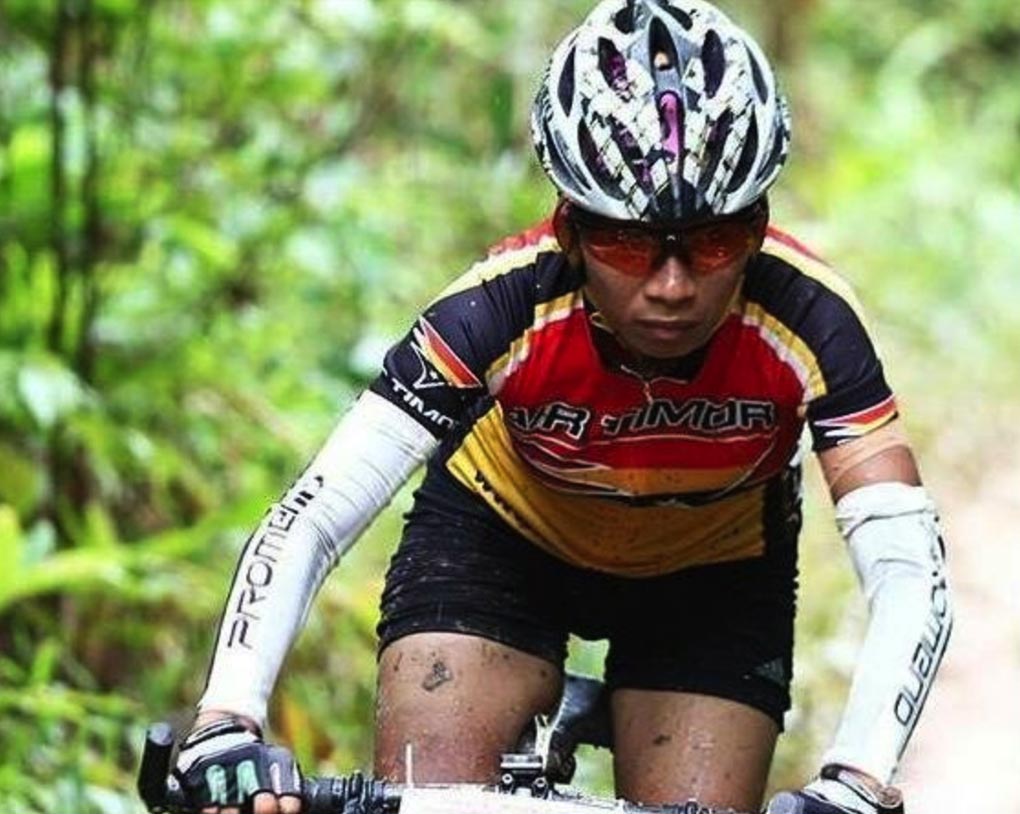
Virginia Graca
How does Timor-Leste compare to other countries?
Where do you want to explore next?

Women in Leadership
PERCENTAGE OF WOMEN IN PARLIAMENT AS OF 2020
39%
PERCENTAGE OF WOMEN IN MINISTRY POSITIONS AS OF 2020
18%
Has a Woman Ever Been Head of State or Head of Government?
No
HAS A WOMAN EVER BEEN SPORTS MINISTER?
Dulce de Jesus Soares, 2018 - 2020
Title IX Timeline


1975
Timor-Leste (then known as East Timor) declared independence from colonial Portugal on November 28, as a result Timor-Leste (East Timor) was invaded by Indonesia.
1999
Timor-Leste (East Timor) held a referendum where East Timorese voted in favor of independence. Women fully participated in the referendum.
2002
Timor-Leste joined the United Nations as an independent country.
2003
Timor-Leste ratified the Convention on the Elimination of All Forms of Discrimination against Women (CEDAW) and the Optional Protocol to CEDAW.
2004
Aguida Fatima Amaral became the first woman to represent Timor-Leste in the Olympics.
2008
Lily Costa Silva became the first woman to represent Timor-Leste in the Paralympics.
2016
Timor-Leste signed the UN Security Council Resolution 1325, affirming that peace and security efforts are more sustainable when women are equal partners in the prevention of violent conflict, the delivery of relief and recovery efforts and in the forging of lasting peace.

Women in the olympics
participation through the years
-
0
-
0
-
0
-
0
-
0
-
0
-
2
-
3
-
1
Women in the Paralympics
participation through the years
-
0
-
0
-
0
-
0
-
1
-
1
-
0
Elite Sports Participation
First Year Women Participated In The Olympics
2004
Year Women’s Participation In Olympics Was Equal To Men’s
2004
First Time A Woman Won An Olympic Medal
The first woman could be you!
First Year Women Participated In The Paralympics
2008
Year Women’s Participation In Paralympics Was Equal To Men’s
2008
First Time A Woman Won A Paralympic Medal
The first woman could be you!
FIFA
Fédération Internationale de Football Association
National Women’s Team?
Yes
First Year Of Play
2016
Pay Gap Comparison
Pay Unknown
Gender Initiatives
The Timor-Leste Football Federation partners with FIFA to implement development programs to help increase women’s soccer participation across the country.
FIFA is committed to the growth and development of women’s football around the globe.
For More Information
FIBA
Fédération Internationale de Basketball
National Women’s Team?
No
