

Under Venezuela’s current constitution drafted in 1999, “All persons are equal before the law, and, consequently: No discrimination based on race, sex, creed or social standing shall be permitted, nor, in general, any discrimination with the intent or effect of nullifying or encroaching upon the recognition, enjoyment or exercise, on equal terms, of the rights and liberties of every individual.” The two administrations in power since the drafting of the constitution have referred to themselves as “feminist” established laws and programs perceived as advancing the rights of women. In 2007, the government implemented the Organic Law of the Right of Women to a Life Free of Violence, which was lauded internationally for expanding the definition of “violence” to include verbal assault, forced prostitution, and trafficking. The Women’s Bank and the Women and Gender Equality Ministry were also created with the intention of eliminating discrimination and achieving gender equality and equity. However, although both authoritarian regimes proclaimed their “feminist” titles, they have done very little to provide true gender equality since being in power for more than two decades. Today, Venezuela currently has the second-highest teenage pregnancy rate in Latin America, has 22 percent female representation in parliament, and according to the 2021 Global Gender Gap report, on average, women only earn 43 percent of the income earned by men. Venezuela’s current political, economic, and humanitarian crises has further compounded these discrepancies. Gender-based violence is on the rise and according to the Digital Observatory of Femicides of the Center for Justice and Peace there were 177 femicides from January to August 2021, and in August alone there was an average of one femicide every 28 hours. Opposition movements often face arbitrary detention when mobilizing, yet civil society organizations such as Mujeres sin Tregua, the Center for Justice and Peace, Acción Solidaria, and Unión Afirmativa are working tirelessly to ensure the voices of women and girls are heard.
Venezuela’s deeply embedded patriarchal structure and gender stereotypes have hindered women from participating in sports. With minimal investment, limited access to safe sporting facilities, and very little media attention paid to women’s sports, female athletes have faced an uphill battle. Despite the barriers, women have proven they’re great competitors on the international stage. The national futsal team won the 1997 AMF Futsal World Championships and is currently ranked 22nd in the world. At the 2004 Athens Olympic Games, Adriana Carmona became the first female athlete to win an Olympic medal for Venezuela when she brought home bronze in taekwondo. Judo player, Naomi Soazo was the first Paralympian to medal when she won gold at the 2008 Beijing Games. BMX cyclist, Stefany Hernandez won the BMX Cycling World Championship in 2015, and bronze the following year at the 2016 Rio Games. Triple jumper, Yulimar Rojas is one of the most decorated athletes in Venezuelan history. The current indoor and outdoor record holder is a two-time World Champion, three-time Indoor World Champion, 2016 Olympic silver medal winner, and 2020 Olympic champion. In 2020, Rojas was named the Best Female Athlete by World Athletics.
Meet and support global leaders creating change in Venezuela:
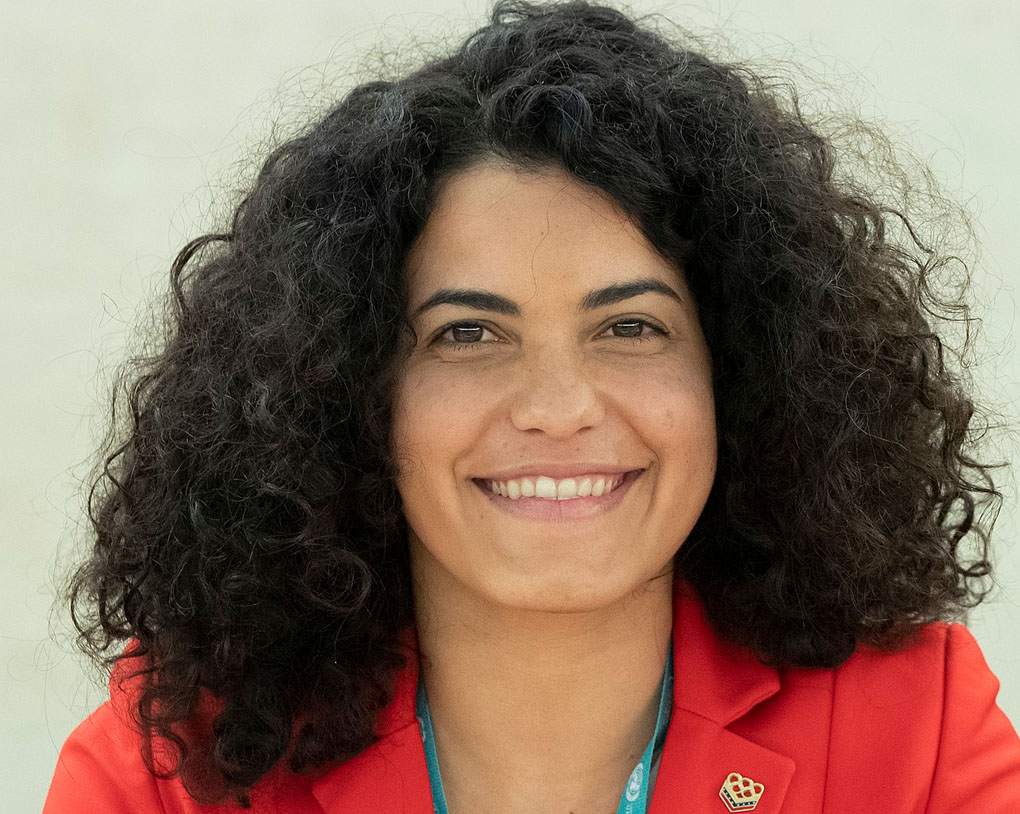
Claudia Contreras
How does Venezuela compare to other countries?
Where do you want to explore next?

Women in Leadership
PERCENTAGE OF WOMEN IN PARLIAMENT AS OF 2020
22%
PERCENTAGE OF WOMEN IN MINISTRY POSITIONS AS OF 2020
29%
Has a Woman Ever Been Head of State or Head of Government?
No
HAS A WOMAN EVER BEEN SPORTS MINISTER?
No
Title IX Timeline


1811
On July 5 Congress approved the Venezuelan Declaration of Independence, announcing a formal break with the Spanish crown and establishing an independent nation.
1946
Women gained the right to vote (full suffrage).
1952
Ursula Selle and Gerda Muller, two fencing (foil) athletes, became the first women to represent Venezuela in the Olympics.
1983
Venezuela ratified the Convention on the Elimination of All Forms of Discrimination against Women (CEDAW).
1992
Swimmer, Nada Vuksanovic, became the first woman to represent Venezuela in the Paralympics.
2002
Venezuela ratified the Optional Protocol to CEDAW.
2004
Adriana Carmona became the first woman from Venezuela to win an Olympic medal (bronze- taekwondo).
2008
Naomi Soazo became the first woman from Venezuela to win a Paralympic medal (gold- judo).

Women in the olympics
participation through the years
-
0
-
2
-
6
-
12
-
13
-
10
-
81
-
50
-
13
Women in the Paralympics
participation through the years
-
0
-
0
-
0
-
1
-
12
-
14
-
14
Elite Sports Participation
First Year Women Participated In The Olympics
1952
Year Women’s Participation In Olympics Was Equal To Men’s
As of 2020, women's participation was still less than men's.
First Time A Woman Won An Olympic Medal
Adriana Carmona: 2004, Taekwondo (Bronze)
First Year Women Participated In The Paralympics
1992
Year Women’s Participation In Paralympics Was Equal To Men’s
As of 2020, women's participation was still less than men's.
First Time A Woman Won A Paralympic Medal
Naomi Soazo: 2008, Judo (Gold)
FIFA
Fédération Internationale de Football Association
National Women’s Team?
Yes
First Year Of Play
1996
Pay Gap Comparison
Pay Unknown
Gender Initiatives
In 2019, the fully renovated Women’s Football Centre in San Felipe was officially inaugurated making it the first female-only technical training centre in South America.
FIFA is committed to the growth and development of women’s football around the globe.
For More Information
FIBA
Fédération Internationale de Basketball
National Women’s Team?
Yes
First Year Of Play
1970
Pay Gap Comparison
Pay Unknown
Gender Initiatives
Increasing the participation of women in basketball at all levels was named as one of FIBA’s eight strategic objectives (2019- 2027) and one of FIBA’s three strategic priorities (2019-2023).
For More Information
LOCAL
Sports
Initiatives
Community Organizations That Have Signed The Brighton + Helsinki Declaration
Venezuela FIT
Venezuela Softball Confederation
